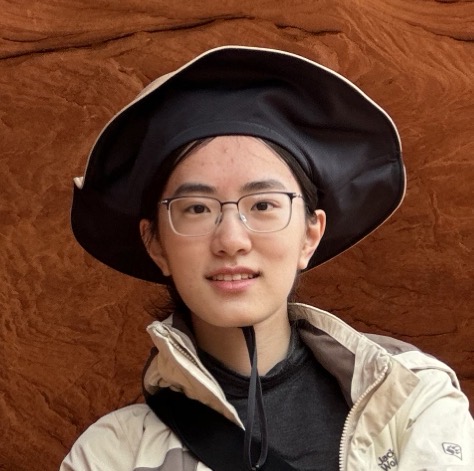
About Yiqian
I am a third-year PhD student in the Linguistics Department at Harvard, specializing in semantics and pragmatics of natural languages, while also intrigued by how meaning is structured in other communicative or computational systems, and by what follows from those differences in structure.
Sitting at the interface between human cognition and communication, natural languages have the potential to reveal fundamental mechanisms employed by our minds to encode and transmit information. Uncovering some of those mechanisms is what I hope my own work on language will contribute to.
One question follows naturally from this perspective: why do sentences in natural language organize/compress information into different types of inferences? As a first step, my projects zoom into one type of inference that many linguists call presuppositions, which have a special logical and contextual profile. My current project aims to explore why certain types of words "trigger" them. My prior project explored how presuppositions interact with implicatures in disjunctions.
Beyond natural language, I am broadly interested in the semantics of formal systems: what kinds of correspondence hold between them, how they are ordered by expressive power, and along what dimensions they trade off. Relatedly, I am interested in exploring how to specify what an AI system should "believe", and how to ensure it maintains consistency across its outputs, especially when some beliefs should be treated as more foundational than others.
If any of this resonates with you, I would love to hear from you! You can reach me at yiqian_wang@g.harvard.edu.
Background: Before Harvard, I completed my undergraduate study at Tsinghua University (2020–2024) in Beijing, where I built foundations of varying depth in linguistics, logic, English literature, mathematics, philosophy, and cognitive psychology. I am proud to have been part of the Tsinghua Logic community.
I grew up in Nanjing, a city of plane trees (梧桐), serene lakes, and old city walls.
News
- — Co-organizing Harvard’s Language and Cognition talk series .